This blog post is the start of a series on how to work with client certificates in Azure API Management to setup a mutual TLS (mTLS) connection. While Azure’s official documentation provides excellent guidance on setting up client certificates via the Azure Portal, we’ll dive into utilizing Bicep and the Azure CLI, to automate the process. In this first post, we’ll cover the basics of how to validate client certificates in API Management.
Automated testing is an essential part of software development, and determining the appropriate scope for your tests is crucial. This is also true when automating Gherkin scenarios with SpecFlow (or Cucumber). In this post I explore the different levels of the test pyramid and describe my preferred level for SpecFlow tests.
In this post I explain how to deploy an Azure workbook using Bicep and set environment specific variables. I’ll also show how to deploy a shared kusto function in Application Insights with the Azure CLI.
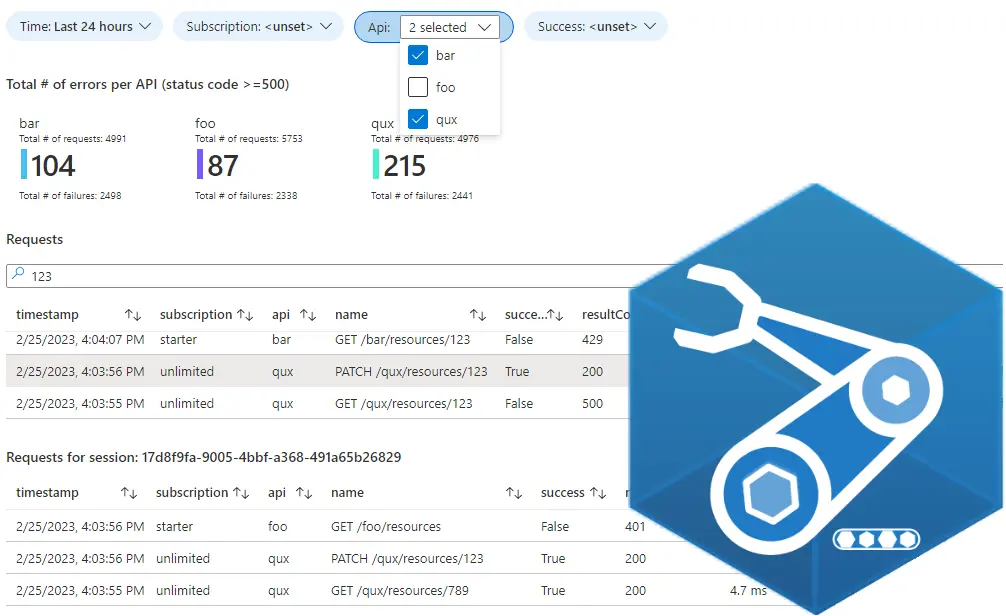
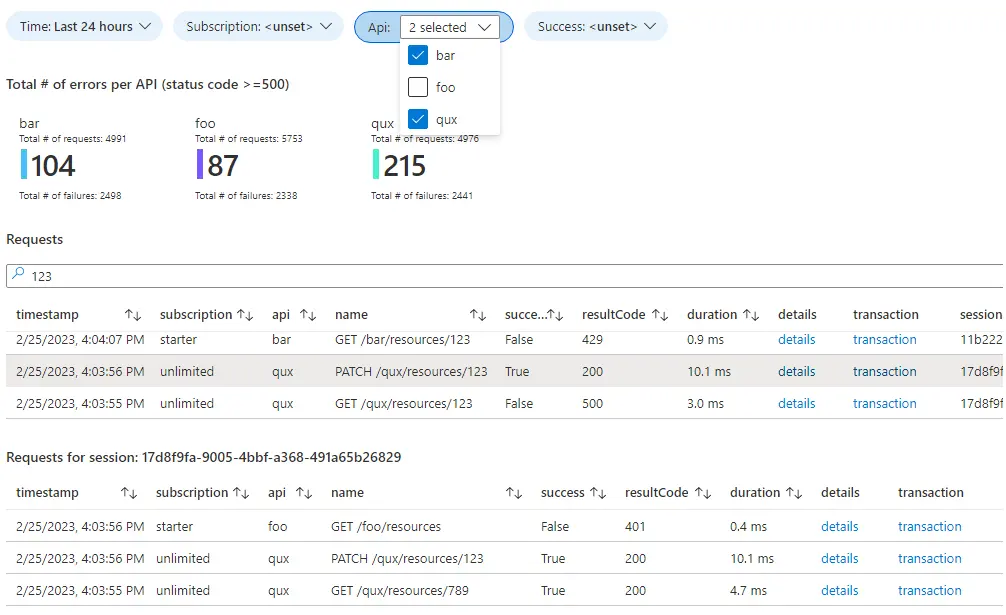
If you use Azure, you most likely use Application Insights for logging. You can use a dashboard to visualize your logging and gain better insights, but dashboards come with some limitations. For more flexibility Azure has worbooks. In this blog post I’ll share some tips & tricks that I’ve gathered over the years. As a sample, we’ll create a workbook that shows information about requests sent to an API Management instance.
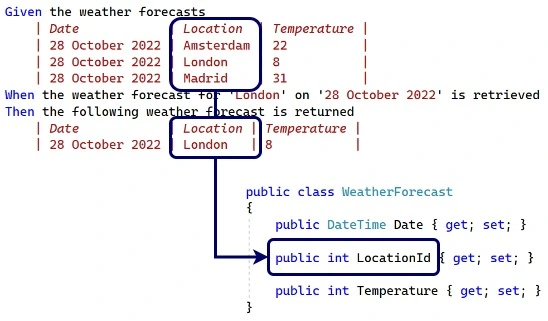
In a previous blog post I wrote about a trick on how to remove technical ids from Gherkin scenarios while still using technical ids in the step definitions. The proposed solution worked well for the given scenario, but not for other cases. In this post I look at several approaches on how to solve this issue.
I use Gherkin scenarios to describe the functional specifications of my software and SpecFlow to automate these scenarios as tests. Usually there will be a couple of scenarios describing the happy path of the feature I’m building but also some scenarios concerning failures. In this post I’ll show my solution how to handle failures in the form of exceptions with the Driver pattern.